Using Hybrid Production to Reconstruct Crime Scenes
Updated: Apr 2
By Nem Perez and Connie Wailan Siu
At this week's Runway conference, we showcased our team's work on a true crime series that set out to do something incredibly difficult: place the host inside locations that no longer exist, allowing audiences to feel fully immersed in the story.
Harlan Coben’s Final Twist, which airs on CBS and Paramount +, takes viewers inside crime cases from the past. The original locations have long since changed or disappeared altogether. There was no way to return to them, no sets to dress, no rooms to re-enter. What remained were fragments: archival photographs and footage, often limited in angle, resolution, and lighting.
That was the challenge the team at The Generation Company (our AI production services division) was given: recreate ten distinct crime scene environments using only what still existed.
Starting With Imperfect Source Material
The source material we received was archival by nature: low-resolution and out of focus photos and footage, previously shot in low light. Using GenAI, Promise artists carefully increased the detail and resolution without compromising the integrity of the image. Once the images were refined, our team used a tool from World Labs to create a Gaussian splat which is a modern, efficient technique that turns a 2D image into a photorealistic 3D scene.
From there, our artists used Promise’s proprietary tools and techniques to generate the geometry of the locations, rebuild missing areas, enhance textures, and ensure each environment could hold up under cinematic scrutiny. Our artists used technology and human artistry to bring these archival images to life, giving them depth and perspective.
Bringing the Story to Life on Stage through Hybrid Production
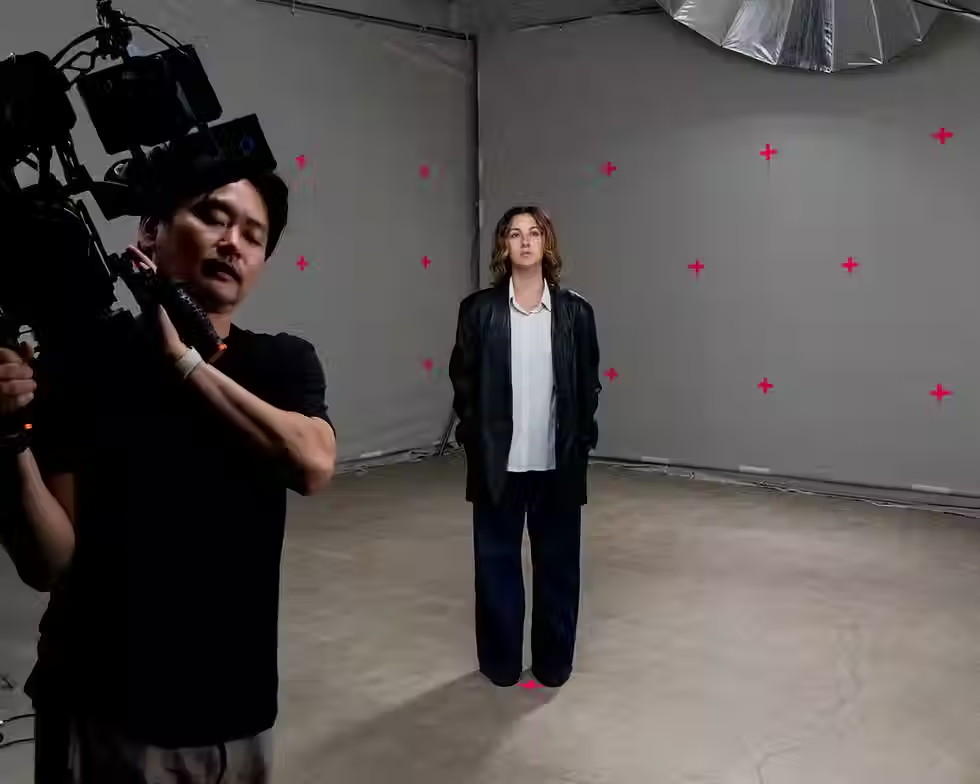
Once the 3D environments were optimized for virtual production, we displayed them on a 16k high-resolution LED wall which allowed the host, Harlan Coben, to seamlessly move through each crime scene. Unlike filming on a green screen, this approach, supported by the work of Scissor Films, allowed him to appear ”inside” the location. As he moved through the scene, the environment shifted with him, creating a sense of realism that helped audiences feel more immersed in the story.
One Example of What’s Possible
This project is just one example of how AI, when used thoughtfully and responsibly, can expand what’s possible in storytelling.
One of the biggest misconceptions about generative AI is that it replaces the need for creatives; that it's just someone behind a computer clicking a button, deferring creative decisions to an algorithm. The reality on this production could not be more different.
What made this work possible was a full, collaborative crew: technologists, 3D artists, cinematographers, lighting teams, performers, and traditional filmmakers working side by side. Generative AI was one part of a much larger filmmaking process, powered by Promise’s MUSE production pipeline and studio operating system.
That blend of human creativity and emerging tools is at the core of how we work at Promise. It is not about replacing craft. It is about expanding what skilled teams can accomplish together. Harlan Coben’s Final Twist challenged us to honor the past by rebuilding it with care. In doing so, it offered a glimpse of how new tools can empower artists to bring stories to life in new and more immersive ways.
Connie Wailan Siu is Head of Production & Nem Perez is the Head of The Generation Company at Promise Advanced Imagination


Comments